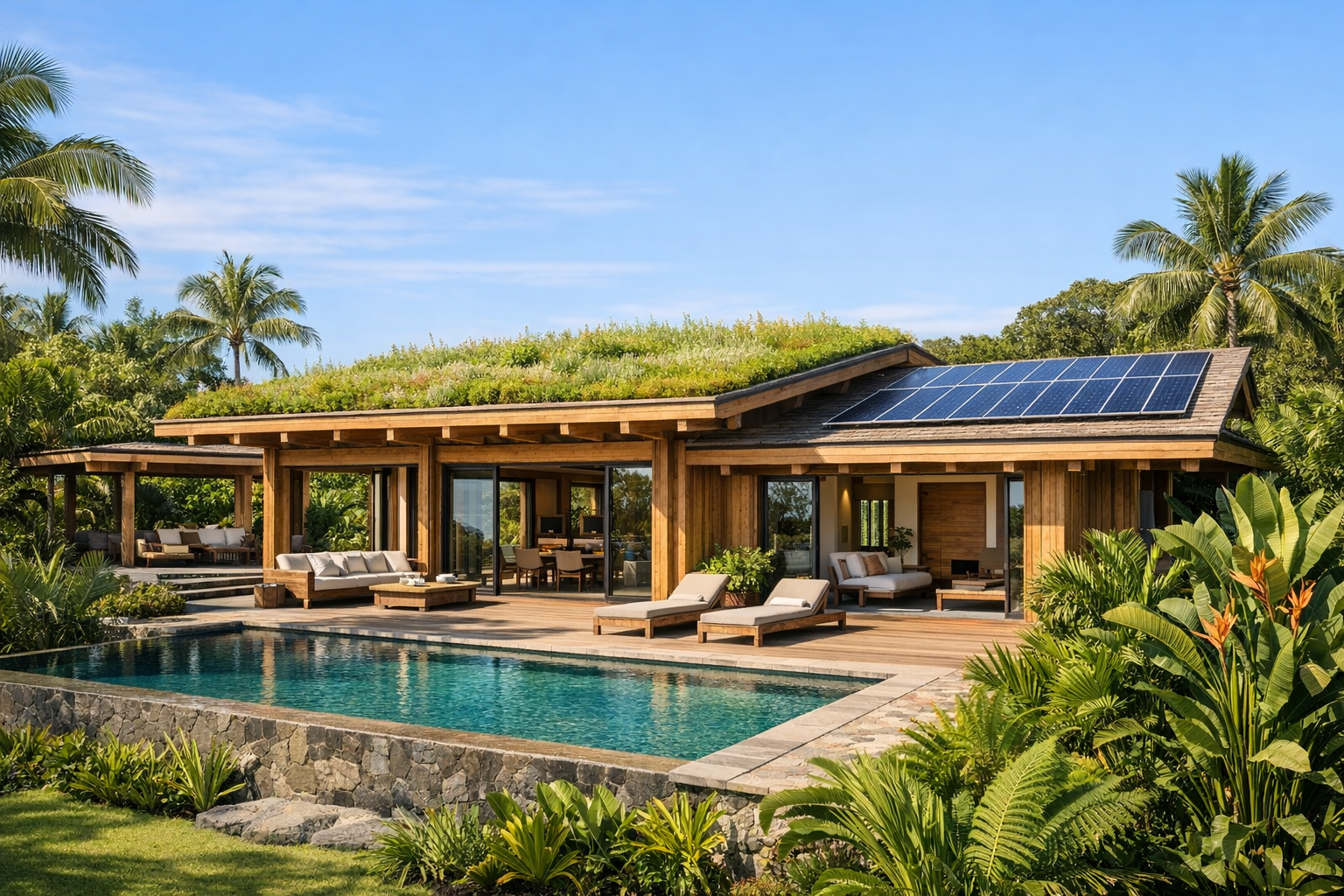
The luxury villa has undergone a quiet revolution over the past decade. Where palatial excess once defined the category, the most sought-after properties now emphasise restraint, materiality, and a deep connection to their surroundings. The best modern villas feel inevitable — as if they could only exist in exactly the place they were built.
The Indoor-Outdoor Collapse
The single most significant shift in luxury villa design is the dissolution of boundaries between interior and exterior spaces. Floor-to-ceiling glass walls that fully retract, covered outdoor living rooms, and pavilion-style layouts mean that the distinction between "inside" and "outside" has become largely irrelevant in tropical climates.
This isn't merely aesthetic. According to Knight Frank's global property research, properties with seamless indoor-outdoor integration consistently command a 15-25% premium over comparable enclosed designs. Buyers aren't paying for architecture — they're paying for a way of living.
Local Materials, Global Standards
The most compelling modern villas draw heavily on local building traditions and materials. In Bali, that means volcanic stone, reclaimed teak, and alang-alang thatched roofing reinterpreted through contemporary design. In the Mediterranean, it's limestone, terracotta, and whitewashed concrete. The materials root the building in its place while the engineering and finish meet international luxury standards.
The Pavilion Model
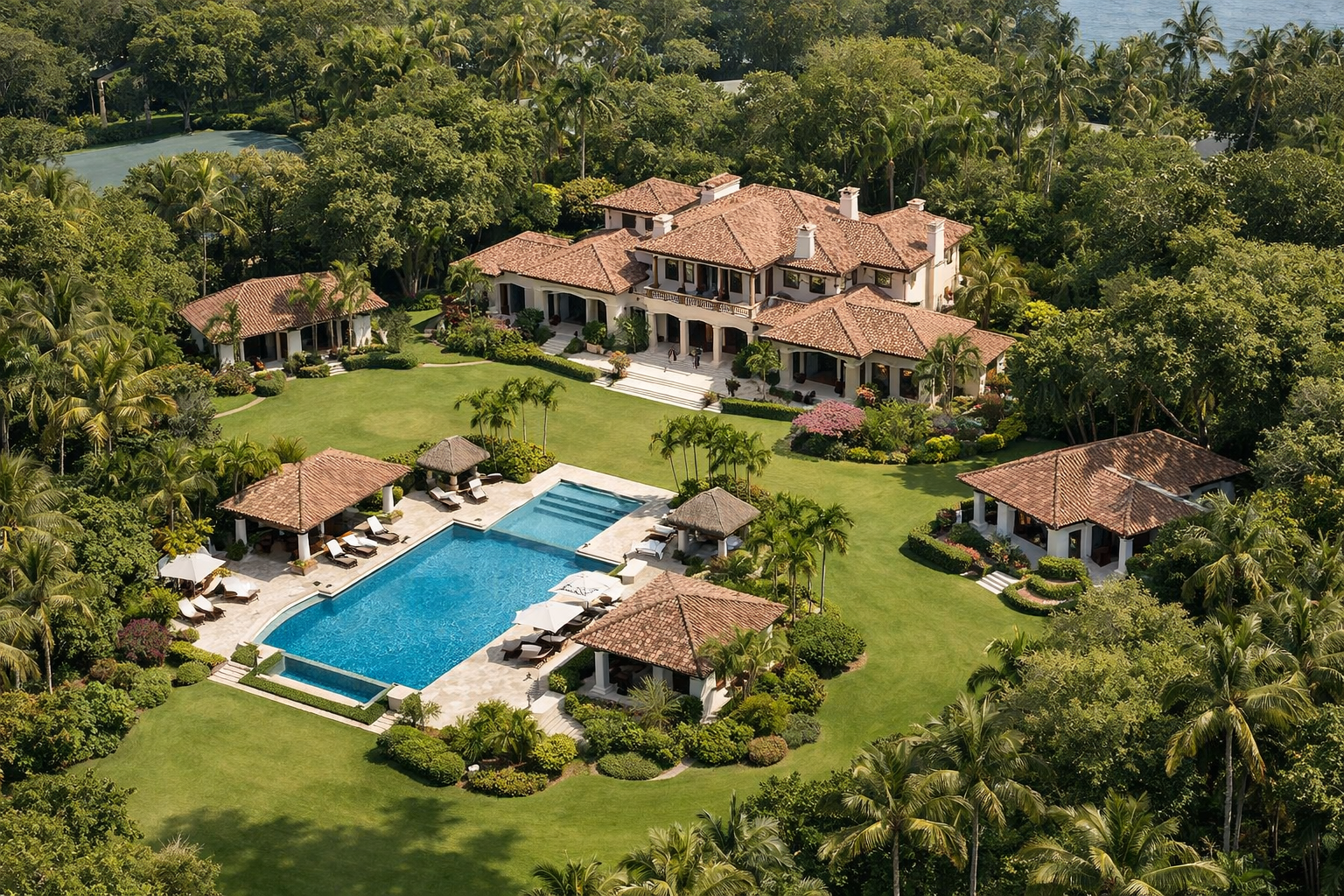
Rather than single monolithic structures, the finest tropical villas increasingly adopt a pavilion layout — separate buildings connected by covered walkways and landscaped gardens. Each pavilion serves a distinct function: sleeping, dining, entertaining, wellness. The approach maximises natural ventilation, creates multiple garden views, and gives large properties an intimate scale that sprawling single buildings can't achieve.
Water as Architecture
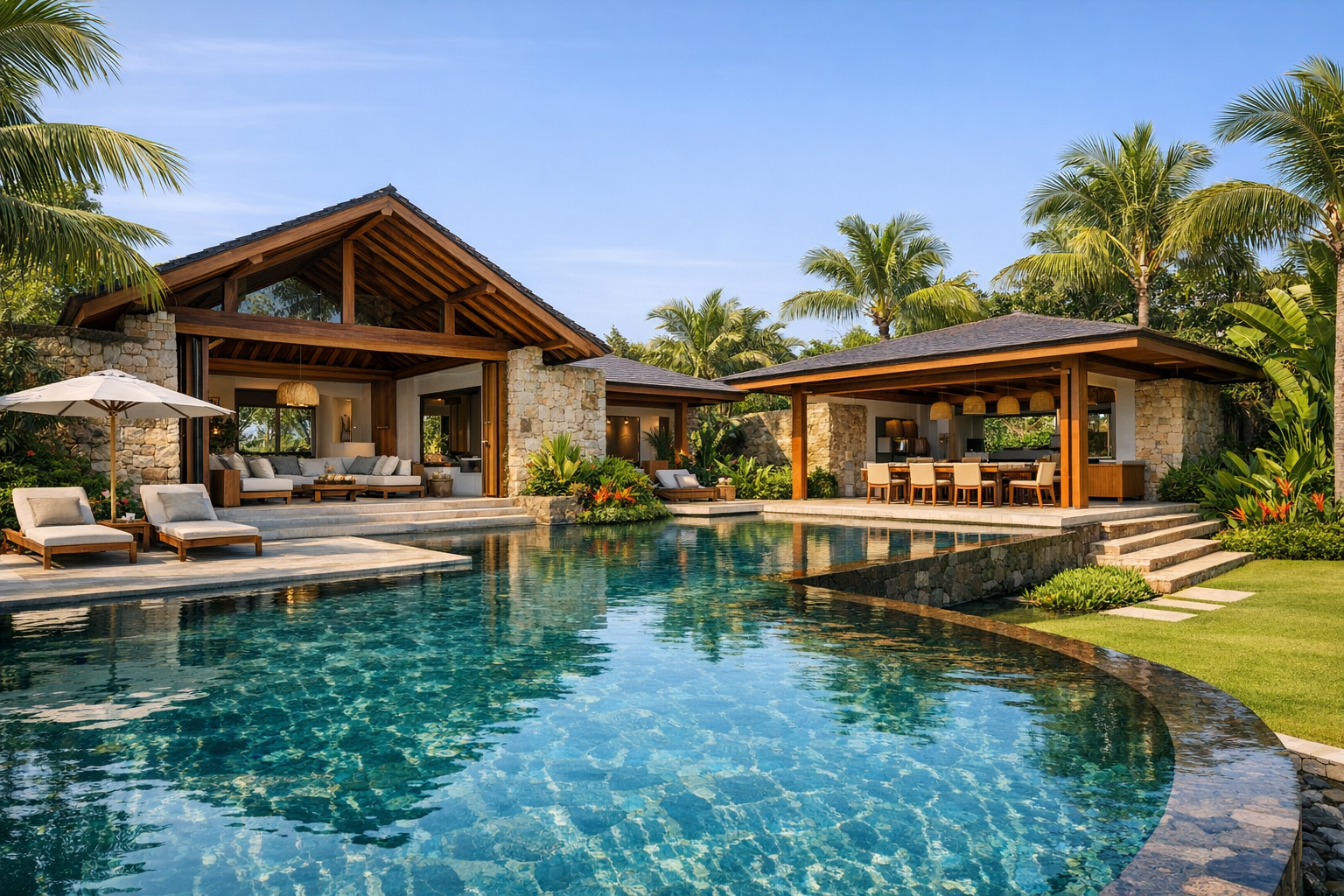
In high-end villa design, water features have moved far beyond the conventional swimming pool. Infinity edges that merge with ocean horizons, reflection pools that mirror the architecture, and integrated water gardens create a sense of calm that defines the property's character. The best architects treat water as a building material — as fundamental to the design as stone or timber.
What Buyers Should Look For
When evaluating luxury villa architecture, look beyond surface finishes. Examine the quality of structural materials, the sophistication of drainage and water management systems, and how the building responds to local climate conditions. A villa that looks stunning in photographs but overheats without air conditioning or floods during monsoon season is a failure of architecture, regardless of its aesthetic appeal.